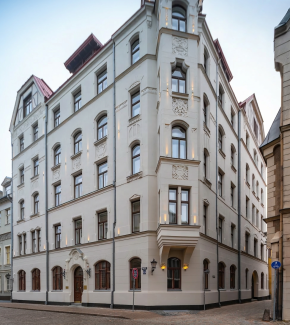


Old Town Riga is a place where the city’s cultural and historical heritage, its everyday rhythms and foreign guests to the capital intersect. It is in this environment that, after approximately two years of reconstruction, the Carillon Aparthotel hotel, equipped with 61 apartments, has begun operating at Pils Street 13. This is not only a new accommodation offer in a historic building, but also an example of how a historic building can be adapted to provide modern hospitality while preserving its character.
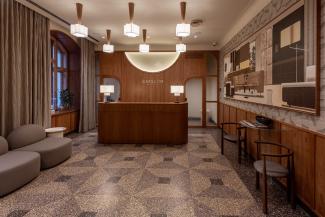
The development of Riga tourism illustrates how well this kind of project aligns with current market trends. In the first quarter of 2025, 214,100 foreign guests visited the city, 20% more than in the corresponding period in 2024. The most rapid tourist growth was observed from Denmark, Sweden, the United Kingdom, Norway and Estonia. At the same time, Riga retains a dominant role in Latvia’s foreign tourism flow: in 2025, 71.8% of all foreign guests in Latvia stayed in Riga. Given this situation, high-quality accommodation in the historical centre is a significant competitiveness factor, especially if it offers both short-term and long-term stays.
AmberStone Group development in the hospitality industry
The AmberStone Group hospitality segment also includes the Carillon Aparthotel. AmberStone Group defines hospitality as one of its most important focus areas. That’s why, in 2016, SIA AmberStone Hotels was founded to develop and manage the group’s hospitality projects. In turn, the Keystone Collection brand incorporates hospitality facilities in the historical centre of Riga, which currently includes two hotels in the Old Town – Konventa Sēta Hotel and Carillon Aparthotel.
The AmberStone Hotels plan not only aims to promote the development of individual facilities, but also to make a broader contribution to strengthening the attractiveness of Old Town Riga in the tourism market. At the same time, the group also operates in other sectors, including medicine, agriculture, construction, woodworking and renewable energy.
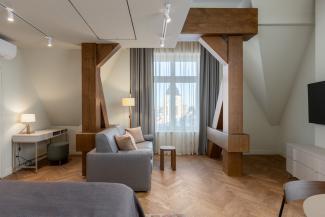
From a business point of view, the entry of the Carillon Aparthotel hotel into the market is significant because it combines several currently significant hospitality trends. Firstly, it is an ambitious investment into the historical buildings of Old Riga. Secondly, it marks a clearly defined shift to the longer-stay segment, which is becoming increasingly popular in Riga. Thirdly, the project shows that being competitive in hospitality today means creating a comprehensive and high-quality stay experience for different audiences. The Carillon Aparthotel is not a classic city hotel, but designed more closely to an apartment format, with fully equipped rooms, a kitchen and other amenities that are conducive to a longer stay. This makes the project a thoughtful and tailored offer designed to address specific needs.
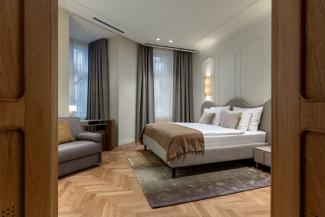
Jānis Vilisons, Chairman of the Board of AmberStone Hotels, talks about national tourist flows, which markets are currently important, and what role large events play in the dynamics of demand in Riga.
Which countries do Carillon Aparthotel guests come from and how is this structure evolving in the first months of operation?
We see the biggest changes in the foreign guest segment. Latvian travellers still make up a significant part of total demand – in certain periods accounting for between 29% to 58% of all guests – however, at the same time, an influx of foreign tourists is clearly visible. The share of guests from the United Kingdom, Lithuania, Sweden, Norway and Germany is growing steadily, but a more pronounced seasonal increase is also observed from the United States and Lithuania. In certain months, the share of foreign guests at the hotel accounts for as much as 80%.
This trend resonates well with the overall development of tourism in Riga. The city has consistently fostered flows of foreign guests in recent years, and the increase is particularly visible in markets for which good connectivity, a sense of security and a clearly understandable destination offer are important. Consequently, the distribution of guests by country is influenced by several factors at the same time – access to air travel, price level, marketing activities, the event calendar, and Riga’s own ability to offer a short, easily accessible and content-rich trip.
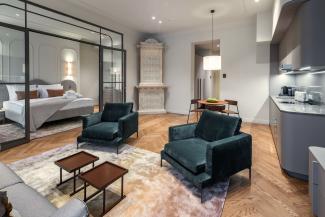
How important is it that the hotel is located in the Old Town?
Infrastructure and ease of access are among the most important prerequisites. Today, travellers choose not only the destination, but also how easy it is to get there, how quickly they can settle in, and how convenient it is to combine leisure with work or exploring the city. In this regard, the location of the Old Town and the Carillon Aparthotel is a very strong point in our favour. The hotel is located a short walk from the Riga Dome Cathedral, Riga Castle, and other places in the historical centre, so guests do not have to choose between functionality and an authentic urban experience.
No less important during the reconstruction was the adaptation of the ancient building using modern technical solutions. An energy-efficient heating system was introduced, internal engineering networks were modernised, and quiet ventilation and air conditioning solutions were implemented. Such an investment in a historic building of the Old Town means not only aesthetic renovation, but also long-term, well-thought-out operational quality, which is becoming increasingly important in the hospitality industry.
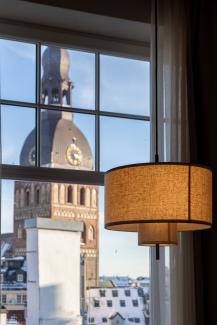
How would you describe the typical guest at the Carillon Aparthotel?
Our typical guest profile is diverse. We attract individual travellers, families with children, and business travellers on longer business trips. The hotel also appeals to visitors who choose Riga as a temporary residence for several weeks or even months. This is a group of guests who do not always feel comfortable in a classic hotel, so an apartment hotel offers them greater independence and everyday comfort.
Each apartment has a kitchen and everything guests need to stay for any length of time. This significantly expands the hotel’s target audience. For business travellers, the opportunity to work in a peaceful environment and stay in a functionally equipped room is important. For families, the additional comfort and convenience provided by a larger layout provides more flexibility.
In addition, the services offered by the hotel itself also matter. Having a gym, self-service laundry, luggage storage and pet-friendly service make a difference on today’s market. Since the hotel has been operating for a relatively short time, long-term trends are still emerging; however, the first months prove that the hotel format is getting attention on the market.
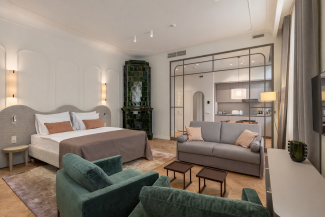
What is the hotel’s approach to maintaining demand outside the active tourist season?
January, February and March are traditionally more difficult months for the entire hospitality industry, so a flexible commercial approach is crucial. During this period, Carillon Aparthotel works with differentiated long-term discounts and B2B offers for companies whose employees come to Riga on business trips. This is a logical channel for an apartment hotel, as the longer-stay segment helps to offset seasonal fluctuations.
At the same time, the local market also remains important. The proportion of Latvian guests is relatively high in the winter months, so marketing activities are also focused on the local audience and the professional environment, including communication on digital channels and LinkedIn. This approach has already yielded results – even during the weakest season, we have maintained a 50% to 60% occupancy rate. This is an important indicator at a time when the entire industry is looking for more effective solutions to smooth out demand over the year.
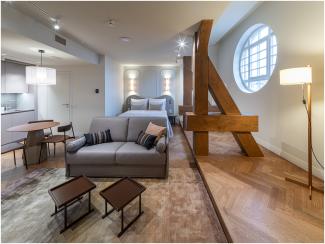
How much impact do Riga events have on demand?
Events are one of the strongest demand drivers. The Riga Marathon, major festivals, city celebrations and other well-attended events can boost bookings by 40% or even double them. This clearly demonstrates how important it is to achieve synergy between the accommodation sector, the city’s event calendar and targeted destination marketing in the hospitality business.
Guests from the United Kingdom and Norway stand out in this segment; for them, a trip to a specific event is a familiar short-term leisure format. Therefore, for Riga and specific hotels, such events mean not only an increase in short-term bookings, but also wider recognition. The impact of marketing activities carried out by the state and the Investment and Development Agency of Latvia is also positive, but there is more potential to be mined, especially with respect to Scandinavia and Germany.
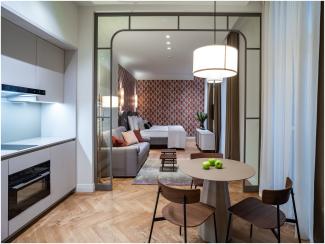
The Carillon Aparthotel proves that a historical setting is no obstacle to creating a modern project if the development respects historical values and demonstrates a clear understanding of market needs. For Riga, the main tourism centre of Latvia and a point of attraction for foreign guests, such projects are important not only as individual investment stories, but also as a signal indicating the city’s ability to develop a high-quality, sustainable and internationally competitive hospitality offer.