


Latvia is traditionally associated with its culture, forests, sea coast and cities with medieval buildings. However, in parallel with the magic of nature and historical cities, there is another, much less known aspect – industrial Latvia.
Industrial development in 19th- and 20th-century Latvia has left behind an impressive network of architecture and infrastructure, which is undergoing revitalisation today. This is not a story about abandoned factories and various industrial objects, but about spaces and places that are still frequented by visitors. The special value of Latvia’s industrial heritage lies in the fact that many sites have not been overly restored or commercialised and have managed to maintain their authenticity. Unlike many other countries, where historical landmarks are completely rebuilt, in Latvia the original structures, materials and atmosphere are often preserved – historic brick walls, metal structures and industrial interiors. This approach creates the feeling that the structures are living fragments of history.
From production to creativity – an industrial adventure in Riga
Riga was one of the most important industrial cities in the Baltics in the 19th century. Factory areas have survived to this day and are being revived as creative quarters, cultural centres and urban meeting places. One of the most striking examples is the Tallinna street quarter. A few decades ago, this area was an industrial zone with warehouses and technical buildings. Today, it is a creative part of the city, where the walls of former factories serve as a backdrop for art projects, concerts and culture. The quarter retains its industrial character – brick wall patterns, metal structures and spacious courtyards create an authentic atmosphere that attracts both locals and visitors. Last summer, the Kimmel quarter experienced a similar revival. The first Riga brewery relocated here from the Old Town in 1850. The company became one of the leading beer and mineral water producers in Latvia, which, by exporting its products, gained even greater prestige. Today, it hosts summer concerts and attracts residents who meet to enjoy peaceful city evenings. No less significant is the VEF Quarter, which was once one of the most important electrical engineering companies in Europe. The history of the VEF is closely linked to the technological development of Latvia – radios, telephones and even cameras were produced here. Today, the quarter is transforming into a modern urban environment, where offices, event spaces and design studios coexist with historic industrial architecture. Visitors can enjoy an unusual ambience at Provodnik, a huge building where a Russian-French joint venture by the same name was engaged in the production of rubber products, the first of its kind at that time. After the end of World War II, a production plant for electrical equipment for passenger electric trains was established in the building, where it operated until 2014. Now it hosts cultural events and excursions.
Industrial stories outside the capital
The story of industrial transformation in Latvia continues beyond Riga, often embedded in military history, nature and the everyday lives of local residents. Karosta in Liepāja is one of the clearest examples of post-industrial culture in the Baltics. Initially, a military-industrial area with a port, forts and infrastructure that served the military, Karosta has become a unique tourist and cultural destination. Visitors can take part in interactive tours, explore military buildings and experience an authentic, imposing, but very impressive environment where industrial architecture merges with the seascape. Līgatne, in turn, demonstrates how industry can harmoniously coexist with nature. The Līgatne historical centre and village was one of the most important enterprises in Vidzeme, around which a workers’ village with unique wooden architecture was erected.
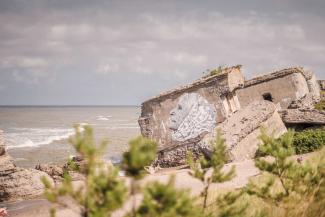
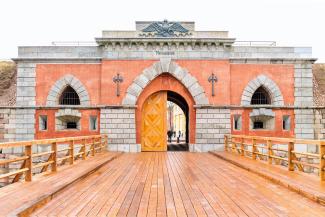
Today, Līgatne offers not only tours of historical industrial sites, but also beautiful nature trails, man-made caves and cultural attractions. Meanwhile, the infrastructure of Daugavpils Fortress demonstrates how military-technical structures can take on cultural and tourism significance. The fortress is one of the best-preserved objects of its kind in Europe, combining industrial and military functions with museums, art centres and public spaces.
Another striking example of the transformation of industrial and military heritage is the Irbene radar station, now known as the Ventspils International Radio Astronomy Centre. During the Soviet era, it was a secret military complex with impressive technical infrastructure and radio telescopes for military applications. Today, Irbene is dedicated to science and experimentation, converting industrial and military structures into a research, education and tourism hub. Excursions allow visitors to explore both technical equipment and the history of the site, highlighting the contrast between former secrecy and modern openness
From towers to tunnels
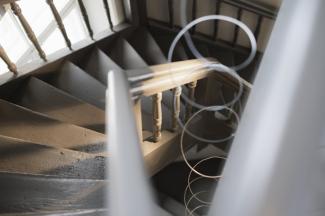
A particularly interesting part of Latvia’s industrial heritage is the technical infrastructure objects that have been transformed into cultural and tourist sites. The Alīses Street Water Tower in Riga is an example of how functional buildings become witnesses to the city’s history. These buildings attract those who are interested in architecture and offer a unique perspective on the development of the urban environment. A similar transformation has taken place in the Karosta Water Tower in Liepāja, from which visitors can enjoy a panoramic view of the city while getting to know the aesthetics of industrial architecture.
The charm of industrial heritage also exists in small but clever engineering structures that often go unnoticed alongside more well-known objects. At the Bīriņi Castle Water Tower, visitors have the opportunity to see the historical well under the glass floor and learn about the principles of the water supply system, gaining insight into how complex it was to achieve creature comforts before automation. Another interesting object is the Kuldiga needle tower, where an industrial exhibition about the history of needles is located on four floors in the former factory, and a summer visit offers a stunning view from the roof terrace over the Old Town.
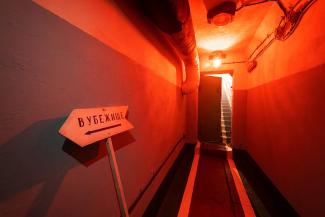
Though tower views are fascinating, the underground world of Riga is equally tempting. Take a tour guided by the history fans at Lost in Baltic through more than 3 kilometres of Riga tunnels, a mystery enhanced by the fact that you only find out where the starting point is once you confirm your reservation. Then explore the Communications Bunker, a revealing look into the infrastructure and secrecy of the Cold War, or go underground Riga Central Market to glimpse the invisible technical and historical underpinnings of everyday city life.
Places where processes take place
Industrial heritage is passed on not only through learning about history, but also when the visitor is able to interact with it, seeing the mechanism, hearing the sound, feeling the material, understanding the sequence of steps. That is why a tour of Rideļi mill is more than a walk through – it is a technological journey along the path that grain travels on three floors as it is cleaned, ground and sieved to gain a deeper understanding of how each stage changes the final result. There is a similar interactive approach at Jaunpils watermill, where the tour focuses on the process of making groats and flour, the importance of the mill in the manor farm and historical actors in the local economy. Visitors do not usually recall specific dates, but acquire a general grasp of how the mechanism works, why the space is arranged in such a way, and how the “work logic” determines the organisation of the entire building. This is also a major advantage of industrial tourism – the ability to tell a story in space, instead of words alone.
Destinations where historical equipment is still in use are particularly attractive. Visitors to Limbažu Tīne can watch wool being processed on traditional equipment, witnessing not only “how it was”, but “how it is made” today. Such an experience offers two benefits at the same time – authenticity and a clear connection with the product as the material is transformed into a tangible result. A similar experience is provided by Vijciems cone dryer, where industrial process is closely linked to forestry and natural cycles. Visitors can learn how seeds are extracted from cones – from drying to opening and separating the seeds – and understand how precise, time-consuming and technologically sophisticated this seemingly simple operation is. The equipment and procedure followed at Čiekurkalte kiln allow visitors to follow the process step by step, illustrating how industrial logic is adapted to biological material.
Visitors can also acquire a wealth of information at museums where production and related technologies are explained in a structured, interactive way. The Elektrum Energy Museum in Ķegums offers a comprehensive glimpse into the history of Latvian energy, including the operating principles of hydroelectric power plants, as well as their importance in industrial development and everyday life. In turn, several thematic museums present the production processes of specific industries – such as porcelain, chocolate and medicines – exploring how technologies, materials and work organisation have shaped both products and consumer culture. These museums complement the experience of surviving production sites, offering a broader context and the intersections between process, product and society.
Movement and transit – depots, ports and railways
Latvia’s industrial history would be far less storied without transport and logistics. The country’s geographical location has traditionally made it a transit point, a role that is still reflected in the urban environment. In Riga, this transformation is vividly illustrated by Andrejsala. The former port area is gradually transforming into a public city space with art installations, open-air events and views of the Daugava. The Spīķeri quarter has experienced a similar evolution, where historical warehouses are now home to a cultural centre for hosting concerts, exhibitions and festivals. Preservation of the site’s architecture retains the port’s historic atmosphere of trade. Ventspils Port, on the other hand, demonstrates how an active industrial environment can coexist with public space. The city has successfully integrated the port areas thanks to promenades, museums and recreational areas, striking a unique balance between industry and tourism. The Gulbene-Alūksne narrow-gauge railway, the only regularly operating narrow-gauge train in the Baltics, offers visitors a unique experience. More than a means of transport, this is a journey through time that highlights the importance of railways in regional development. Another narrow-gauge railway is located in the Ķekava region, where visitors travel from a peat bog to a factory, learning about peat, its extraction and use, as well as the history of narrow-gauge railways along the way. The Baloži peat bog railway is a preserved narrow-gauge railway with an approximately 2.5-kilometre section of historical track. The museum railway collection features several rare and unique locomotives and wagons, including an authentic peat railway dining wagon, which allows you to imagine everyday life in an industrial environment.
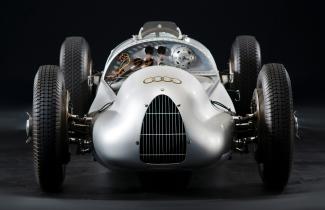
The rich heritage of the transport sector is further enlarged thanks to museums that incorporate production and technology content. Riga Motor Museum presents the development of cars and transport in the Baltics, illustrating various mechanisms and technical solutions that have shaped the history of mobility. Similarly, the Latvian Railway History Museum tells the story of railway development and the technical devices that have kept this means of transport rolling.
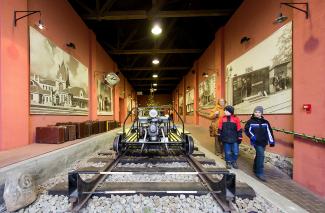
Industrial heritage sites in Latvia include a diverse range of cultural and historical sites that reveal how production, energy extraction, transport and service provision took place in different eras. Visiting such sites enhances every tourism experience, making the trip not only visually appealing, but also informative, a living record of technological changes, everyday lives and Latvia’s development path.


