

The business events industry is undergoing significant changes worldwide, and gradually strengthening its position in Latvia. To gain deeper insight into the industry’s development and Latvia’s competitiveness, we spoke with Inga Korneliusa, Director of Sales for the Baltic region at Radisson Hotel Group.
MICE Market Dynamics
In Latvia, the MICE tourism market continues to grow steadily, showing positive momentum across the industry. Inga Korneliusa notes that although the sector has not yet returned to its 2019 levels, demand is increasing every year: “We clearly see that the MICE industry is developing and expanding – the number of tourists and events is growing annually.” She adds that various external factors, including the geopolitical situation, have influenced the pace of growth in recent years. However, the overall trend remains very positive – participant flows and the number of events continue to rise.
Riga, as Latvia’s capital, plays a leading role in attracting business tourism. In 2025, Riga hosted several major events, including EuroBasket 2025, which created substantial demand for hotels and conference facilities. Every year, the city also holds international conferences in IT and security, attracting hundreds of participants from abroad. These and similar events demonstrate Latvia’s ability to successfully organise high-level MICE events.
Competition in the Baltics
In the international conference market, the Baltic States are often perceived as a single region. As Korneliusa observes, many organisers initially do not differentiate between Latvia, Lithuania, and Estonia. “In the eyes of many international companies, the Baltics initially appear as one whole. Only during subsequent discussion do they start to understand the differences,” she explains. In this context, Riga and Latvia must clearly position themselves, highlighting their strengths and unique value.
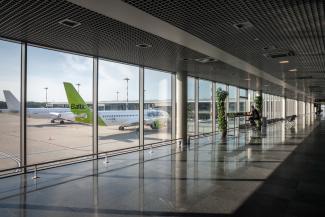
One of Riga’s greatest advantages is its accessibility – the airport is only a 15-minute drive from the city centre. The national carrier AirBaltic provides an extensive network of direct flights, and several major airlines, such as British Airways and Lufthansa, also fly to Riga. Many international routes have been restored in recent years. Although Vilnius and Tallinn also have modern and compact airports, Riga currently leads the Baltics in the number of direct connections.
Different Approaches to Attracting Clients
With respect to regional competition, Vilnius and Tallinn use different strategies to attract events. The Vilnius city and convention bureau takes a highly proactive approach. “They conduct serious research, identify which conferences take place in their target industries, and then directly engage the organisers to bring events to Vilnius,” says Korneliusa. As a result of this targeted pitching strategy, roughly one-third of all conferences held in Vilnius are the outcome of direct acquisition. Tallinn, in turn, focuses strongly on its “event ambassador” programme, involving local industry leaders. “The Estonians have an ambassador programme – they select local business professionals who approach their international associations and help bring their events to Tallinn. They say: bring your annual conference here, and we will assist with hotels, transportation, flights – everything,” the expert reveals.
Korneliusa emphasises that destination marketing remains critically important. Many potential organisers do not consider the Baltics as their first choice, so active outreach is needed to showcase the region’s advantages. “You must be proactive and know how to present yourself and highlight every strength, because people simply don’t know what is available here,” she stresses.
Challenges and Barriers to Development
Although Riga has several advantages, challenges remain that limit MICE tourism growth. One such factor is the lack of long-haul direct flights. According to Korneliusa, direct connections are essential in today’s conference business: “For a B2B client travelling to a conference, connecting flights are no longer acceptable. People do not want to fly with layovers.” Riga offers excellent connections within Europe, but the absence of direct routes from North America and Asia limits the market potential. As a result, Latvia’s MICE sector currently focuses on European and regional markets that can be reached conveniently via existing routes.
Another challenge is relatively low brand awareness internationally. Major events often take place in cities where industry companies and associations are historically concentrated – London, Amsterdam, Berlin, and other metropolitan hubs. To overcome stereotypes and outdated perceptions about Latvia, active marketing and sales efforts are essential.
A positive example is the Events Club Association Forum 2025, which took place in Riga this year. Over several days, the city welcomed more than 100 representatives from MICE agencies, who explored Riga as a conference destination. The event generated several conference enquiries, and more are expected in the coming year.
Hotel Quality and Value for Money
Hotel and conference infrastructure is another area where Latvia excels. In recent years, Riga has developed modern conference venues and hotels capable of hosting both small seminars and large congresses. The quality standard is high, while prices remain competitive compared to other European cities. Korneliusa highlights the balance between service and cost. With a comparatively smaller budget, event organisers can receive high-level service and product quality. For example, daily delegate rates for conferences range from approx. EUR 70–80 per person, while in Western European metropolises the same offer can cost up to twice as much.
“The quality that event organisers receive in Riga – facilities, catering, technical equipment – is often even better than elsewhere in Europe, but at a significantly lower price,” Korneliusa notes. Although self-service technologies are becoming more popular in the hotel industry, Latvia maintains classic, high-quality service with a personal touch – something foreign guests highly appreciate.
Sustainability as the New Standard
Sustainability is becoming a key criterion in the MICE sector. Both corporate clients and associations pay increasing attention to the environmental footprint of events. This trend is particularly strong in Northern Europe and Scandinavian markets, where travel emissions and venue sustainability practices are assessed with great scrutiny.
Korneliusa confirms that Latvia’s conference infrastructure is adapting to these requirements, and major hotel chains are implementing new solutions. Radisson Hotel Group offers the “Carbon Negative Meeting” concept, which automatically offsets each event’s carbon footprint in its hotels across Europe, the Middle East, Africa, and the Asia-Pacific region – at no additional cost to the client. In partnership with First Climate, clients can also offset the carbon footprint of group accommodation. All projects are certified with Gold Standard or Verified Carbon Standard, ensuring high reliability and positive social impact.
In the context of climate change, Latvia’s moderate climate has increasingly become an advantage – during summers when Southern Europe faces heatwaves, more companies and travellers appreciate the possibility of organising events in Latvia, where the climate is cooler and greener. Sustainability, therefore, is no longer merely an added bonus but an essential component of the MICE offer, aligned with global trends.
Added Value – Unique Experiences and Emotions
To persuade conference and incentive travel participants to choose Latvia, added value is becoming increasingly important – unique experiences and memorable emotions that a destination can offer beyond the official programme. Korneliusa has observed a shift in client preferences: everyone is looking for a “wow effect” and experiences that stay with them. “People today are emotion-driven – participants want new experiences. If we offer something special, such as creatively making a company logo, riding a bobsleigh in Sigulda, or going to the market and cooking with a well-known chef – it will stay in their memory, and they will want to return.”
Latvia offers no shortage of original team-building and special event experiences. Options include adrenaline-filled activities such as luge and bobsleigh tracks, racing simulators, or indoor skydiving at Aerodium, as well as cultural and culinary adventures. Korneliusa notes that Latvia has strong event agencies specialising in creative, high-quality programmes, and their work is highly valued by international clients.
Seasonality and the Role of MICE in the Off-Season
Seasonality has long been a challenge for Latvia’s tourism industry – most leisure travellers arrive in summer, while hotels and service providers experience lower demand in autumn and winter. MICE tourism helps balance these fluctuations by filling quiet periods with corporate events and conferences. Korneliusa explains that the typical conference season in Latvia runs from autumn to spring: “From October to April, leisure tourism is lower, and this is when corporate clients are extremely valuable for the city and hotels. One large international congress can bring significant economic benefits, equivalent to intense tourist flows in summer. Moreover, business events also leave a non-material legacy – building networks, opening investment opportunities, and increasing Latvia’s visibility within specific industries. That is why conference tourism is considered a strategically important direction that helps balance tourist flows throughout the year and provides long-term benefits for both the industry and the national economy.”
Latvia’s Potential in the MICE Segment
The portrait of Latvia’s MICE tourism sector demonstrates that the country has a strong foundation to further strengthen its position in this market. Latvia’s key strengths – good accessibility within Europe, a compact and safe urban environment, high-quality hotels and services at reasonable prices, a wide variety of unique experiences, and a professional event industry – already allow Riga to compete confidently within the Baltic region and attract new events. The main challenges remain a lack of intercontinental flights and the need for stronger international positioning, but these obstacles can be overcome through close cooperation within the industry and with state institutions.
Korneliusa remains confident in Latvia’s potential: “We need greater visibility on the international stage to attract more conference, congress, and event organisers. Riga deserves to be among Europe’s leading event destinations.” To achieve this goal, continued investment in destination development is essential – improving infrastructure, developing innovative tourism products, and communicating Latvia’s strengths to the world in a targeted and strategic way.


