

One of the most common questions travellers ask when planning a trip to Latvia is: is it expensive here? This is particularly relevant for MICE event coordinators, because choosing Riga or Jūrmala for a large-format event – rather than, for example, Oslo, Amsterdam or Berlin – requires a clear rationale in terms of costs and benefits. Individual travellers, when planning their next travel budget, also usually look for a balance between a high-quality experience and a cost-effective choice.
Is travelling in Latvia expensive? The short answer is no. This is a conclusion that anyone working in Latvia’s tourism industry would likely confirm. Compared with destinations in Western and Northern Europe, travelling in Latvia often costs significantly less, without compromising high quality and good service. This sense of balance between budget-friendly choices and more exclusive leisure options is one of the greatest advantages of what Latvia offers. Moreover, Latvia is compact and distinctly green – on a single trip you can combine the capital’s cultural life, the restful calm of a seaside resort, and rural nature adventures. And the price difference, compared with equivalent offers in Western and Northern Europe, is in many cases a pleasant surprise.
To compare the prices of tourism services, it is safest to rely on independent studies with uniform, clearly defined criteria, which make it possible to assess different destinations objectively on a like-for-like basis. Comparisons aimed at budget travel, meanwhile, are more useful for a specific group of travellers, while social media can serve as an additional source of practical impressions and first-hand experiences. That is precisely why a city’s image and credible arguments that can be easily supported by internationally recognised information also become particularly important. Riga’s 1st place in the 2025 Post Office City Costs Barometer study provides strong and convincing confirmation of the competitiveness of Latvia and its capital.
Next, we will describe the principles used to compile price and cost comparisons between cities, who carries out these measurements, and which traveller categories they are intended for. We will also analyse Riga’s price level by comparing it with the capitals of other Baltic states, as well as with selected Nordic and Western European capitals. In addition, we will assess the price offers available in Jūrmala and Latvia’s regions.
City price comparisons – methodologies and results
City-by-city comparisons of tourism service prices are, in practice, compiled using different methodologies, and the quality of the results depends on whether the comparison is based on primary, structured measurements or secondary summaries and user-submitted data. In professional circles, one of the most trusted sources is the “Post Office Travel Money City Costs Barometer”, a platform that compares the costs of short city breaks. It is a brand and financial services arm of the UK Post Office Group which, alongside foreign exchange and travel money services, regularly publishes “basket of goods” style studies on travel costs in European cities. A key distinction of this study is its methodology: it does not rely on unverified sources such as information provided by individuals on social media, but instead calculates the same “tourist basket” for each city using publicly available and institutional sources – for example, hotel price monitoring over a specific period, public transport fares, the official entry prices of tourist attractions, and observations of food and drink price levels. As a result, it produces information that is useful for assessing destinations’ competitiveness, reduces “interpretation”, and allows the focus to remain on genuinely comparable cost items.
It is worth noting that traveller-focused financial information is also published by the Price of Travel platform in its regular budget travel index, the Europe Backpacker Index. Meanwhile, Numbeo is a global data platform that compiles predominantly user-submitted prices on the cost of living in cities and can serve as a general reference point to illustrate a city’s relative price level for everyday spending.
Comparing Riga with other European cities
For the comparison, we will use the Post Office Travel Money City Costs Barometer 2025, which calculates the same “tourist basket” (12 items) for the cities included in the ranking. This basket includes, for example, two nights in a 3-star hotel in the city centre (for two people), a three-course dinner with house wine (for two people), drinks, a 48-hour public transport ticket, museum/gallery visits, and other typical “city break” costs. According to the City Costs Barometer 2025, Riga in 2025 was the cheapest city among 38 European cities compared in the study, making it the most affordable destination for a short trip in Europe. In the City Costs Barometer 2025 data, the total cost of the “basket” in Riga was EUR 297, including two nights in a 3-star hotel for EUR 144. In practical terms, this means that even on a mid-range budget in Riga it is realistic to plan restaurant visits and paid activities while keeping costs balanced. In the study, a three-course dinner for two with house wine costs EUR 74, a 48-hour public transport ticket EUR 8, and entry to a prominent museum EUR 8.
For comparison, the same calculated basket in 2025 was EUR 299 in Vilnius, EUR 395 in Tallinn, EUR 451 in Berlin, EUR 550 in Helsinki, and EUR 685 in Amsterdam. In the notably more expensive cities, costs exceeded EUR 700: EUR 738 in Copenhagen and EUR 747 in Oslo.
The cost differences relative to more expensive cities are significant and even surprising: compared with Riga, a short city break in Oslo and Copenhagen is around 2.5 times more expensive, while in Amsterdam it is approximately 2.3 times more expensive. This gap provides objective confirmation of Riga’s leading position in terms of value for money among European cities.
Current travel trends in Latvia
Each year, travelling in Latvia becomes easier and more convenient. Mobility is supported by a well-organised transport network, which allows you to travel freely throughout Latvia both by public transport and rental vehicles. The use of public transport within Latvian cities, or by train to towns nearby Riga (for example, Jūrmala or Sigulda), costs on average EUR 1.50–4. Car hire per day, depending on the model and insurance, ranges from EUR 30–70. For outdoor enthusiasts, nature trails across almost all of Latvia are available free of charge, while museum visits usually cost a nominal EUR 3–10. In the winter season, ski equipment hire and a lift pass for a few hours cost around EUR 45 on average, while private guided tours for groups in an urban setting are available from EUR 40–80 per hour.
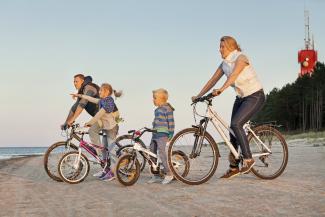
Latvia continues to offer travellers a harmonious balance between metropolitan dynamism and unspoilt nature, with a diverse range of prices that are significantly influenced by geographical location. Riga traditionally serves as the starting point because it is home to the largest international airport in the Baltics, providing convenient logistics for onward routes.
Riga – the European Art Nouveau metropolis and home of Michelin stars
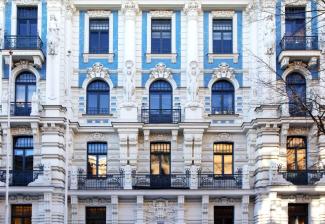
Riga is unique for its Art Nouveau architecture, its UNESCO-listed Old Town, and its vibrant gastronomic scene. Four-star hotels dominate the capital, where a room typically ranges from EUR 90–140 per night on average. The city is also home to the country’s most exclusive five-star hotels (some awarded Michelin Keys), where overnight stays cost around EUR 180, while three-star hotels are available from EUR 55–85. Riga and Latvia more broadly also shine with Michelin stars, awarded to restaurants such as Max Cekot Kitchen and JOHN Chef’s Hall, offering exclusive tasting menus priced at EUR 120–180. The city also has several Bib Gourmand restaurants that deliver excellent quality at a more accessible price point (EUR 40–65), while lunch in cosy cafés costs EUR 12–20. Well-being is supported by modern day spa centres, often located within hotel complexes, with entry typically priced at EUR 30–55.
Jūrmala – the pearl of the Baltic Sea and a natural healing centre
Jūrmala is a unique resort town thanks to its 33-km-long white sandy beach and historical wooden architecture. The highest 4- and 5-star SPA hotels, oriented towards relaxation and health restoration, dominate here, costing an average of EUR 130–260 per night; SPA treatments incorporating local mineral waters and healing mud are available on average for EUR 55–110. But guest houses further from the sea are available for EUR 75–115. In terms of gastronomy, Jūrmala is also home to restaurants included in the “Michelin” recommendation list, for example, “36. Line”, where a meal costs an average of EUR 35–60.
Authentic regional manors and nature (Kurzeme, Vidzeme, Zemgale)
The Latvian regions of Kurzeme, Vidzeme and Zemgale offer the opportunity to visit impressive Baroque pearls, such as Rundāle Palace and magnificent medieval castle ruins. Most accommodation here is offered by guesthouses, manors and small design hotels, which offer a more personal approach and serene atmosphere, with average prices from EUR 50–95. The regions boast a “Michelin Green Star” for sustainability (“Pavaru māja” in Līgatne), as well as other restaurants included in the guide in Valmiera and Tērvete, where a meal costs from EUR 30–55. The regions also feature the unique experience of the traditional sauna ritual under the supervision of a sauna master, which costs an average of EUR 100–160. Active recreation enthusiasts can enjoy a wide range of offers – from hiking routes, including along the sea, and extreme bungee jumping from a great height in Sigulda, in the ancient Gauja Valley, one of four national parks in Latvia.
Latgale’s blue lakes and hospitality
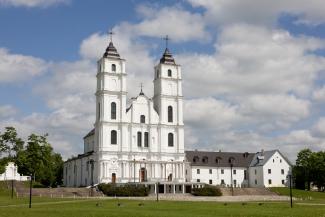
Latgale is particularly highlighted for its strong identity, unspoilt nature and countless lakes. The region is dominated by guest houses and rural tourism accommodations, which are often the most budget-friendly in the country, averaging EUR 45–75 per night. Latgale serves up a unique culinary heritage (homemade cheeses, bread, grain dishes), which is available for EUR 10–18. These extremely competitive prices allow every traveller to enjoy the hospitality of local people and ancient traditions, such as pottery and other crafts. The uniqueness of Latgale is complemented by the Rothko Museum and Aglona Basilica, making it an attractive and moving destination.