


Small towns in Latvia – part of a bigger journey
Discover the richness of Latvian communities – no matter which region you go to, you will find towns of all sizes, each with its own stories and history. Get to know the inhabitants to understand local life and learn about local attractions.
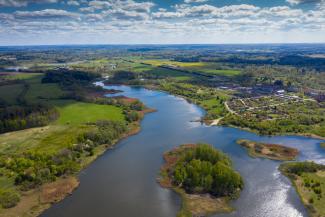
When driving in Latvia by car, visitors often pass through small towns without even noticing what makes them special. In fact, it might be tempting to stop for a snack or to top up your tank before moving on. We’re here to fill you in on all the hidden gems you’re missing!
Small town character
It is often easier to notice the little things once you venture out of the big city: the local environment, architectural details, historical stories and the daily rhythms of residents. In addition, each region influences the character of the cities within it – both in terms of landscape and architecture, as well as local habits, food and festivals. For example, even small towns in Vidzeme are home to historic manors and churches, not to mention ancient market traditions and proximity to forests, rivers and hilly terrain. In Latgale, small towns are often associated with a diverse cultural history, expressed through churches of different denominations, ceramic and craft traditions, as well as extensive lakes, which influence both landscapes and lifestyles. Small towns in Zemgale are characterised by more open rural spaces and agriculture – wider horizons, earlier development around trade routes and often unique traditions among local entrepreneurs. In Kurzeme, however, small towns are often associated with proximity to the sea or a history of ports and fishing, a strong local identity, as well as a traditional craft and cultural life – from small museums and careful preservation of ethnic affiliation to fishermen’s festivals on the coast. Regions and small towns are also impacted by the evolution of ethnic makeup and what countries and peoples have ruled a specific area at different times.
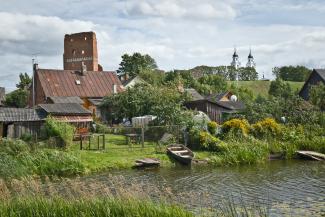
In this article, we will highlight a few interesting sights in small towns in Latvia, which you can include in your travel itinerary as you make your way to larger cities or other attractions. Each of the proposed towns has many more interesting stopping points, its own history and something special to supplement your overall Latvian experience.
The stubbornness and diversity of Kurzeme
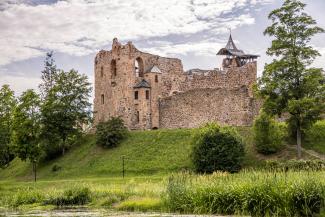
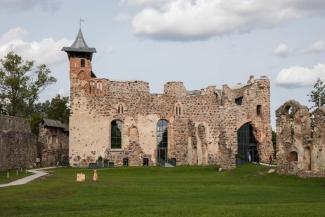
Grobiņa is an ancient city in western Kurzeme on the banks of the Ālande River, which is considered the oldest inhabited place in Latvia. It is mentioned in historic writings by name, and over the centuries has also been inhabited by Vikings, a legacy that is still visible today. The Scandinavians created a kind of community in Grobiņa that was new for Latvia and Northern Europe – a proto-city with several thousand inhabitants. In terms of scale, it was similar to other European cities of the time. The Grobiņa Order stone castle was built in the first half of the 14th century. In the 17th century, four visually significant earthen bastions were built around it. Over the centuries, the castle has been an important military fortification. The medieval walls, fortification bastions, moats and slopes built in the 17th century have survived to this day.
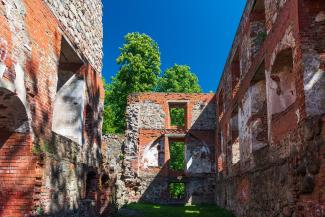
Aizpute is a small town in Kurzeme with historical buildings and a significant legacy from the Livonian Order. The construction of the Livonian Order (Ordensburg Hasenpoth) castle was started in the 13th century by Landmeister Dietrich von Groningen. Initially, it had a forecourt, corner towers and wooden buildings in the courtyard, serving as a border fortification and meeting point for the Livonian Order. In the 15th century, a residential building with cellars and a gallery was erected near the eastern wall of the castle wall. In the courtyard above the gate, decorative plaster has been partially preserved. The castle was still inhabited in the 1970s until it was destroyed by fire.
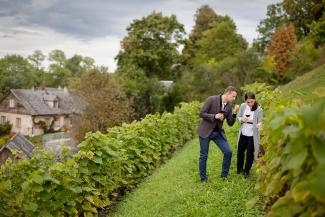
Sabile is a small and romantic small town in Kurzeme in the Talsi region, located along one of the most beautiful and deepest sections of the ancient Abava River valley. Its atmosphere was shaped by the river itself, which flows through the city, and its narrow, small streets. The most recognisable landmark in Sabile today is Wine Hill; for several years, it was entered in the Guinness Book of Records as the northernmost open-air vineyard. The character of the city is also reflected in its creative and unique cultural life, first and foremost during the Sabile Wine Festival in July. The historical buildings of Sabile are monuments to urban development from the 15th to the 19th centuries.
Proud and hospitable Latgale
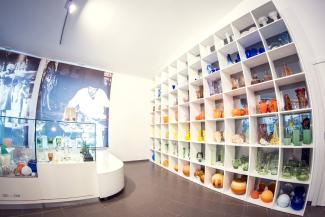
In Līvāni, be sure to visit the Līvāni Glass Museum, which recalls the history of the local glass factory, explains the technology behind glassware production and provides an opportunity to view several thousand glass products made at the factory. This is also the only open glass blowing workshop in Latvia. Two glass blowers work here, offering visitors the opportunity to watch first-hand how a unique glass product is created from hot glass mass, especially since moulds are not used in the work process. Glass production in Līvāni began in 1887 due to its favourable economic, production and raw material extraction conditions: quartz sand in Grīva forest, dolomite in Dubna River and the proximity of the Riga-Orla railway.
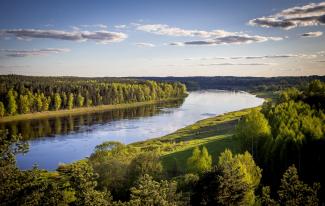
The calling card of Krāslava is St. Ludwig’s Roman Catholic Church – the most striking example of Latgale Baroque architecture and a popular destination for pilgrims, making Krāslava the second largest pilgrimage site in Latgale after Aglona. When you are in this part of Latgale, be sure to visit the section of the Daugava Valley from Krāslava to Naujene, which is home to a unique nature park – Daugavas Loki. The park was created to preserve the unique and peculiar landscape of the middle reaches of the Daugava Valley, the biodiversity of plant and animal species, as well as cultural and historical monuments. The nature park features eight picturesque Daugava Loki or meanders ranging from 4 to 6 km in length, considered to be the oldest Daugava Valley formations in Latvia, where the river’s natural course has been preserved.
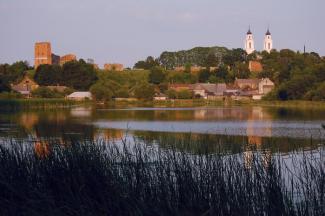
Ludza is an ancient Latgale town in a picturesque setting with a charming old town nestled in between lakes. A castle stands guard in the middle of the city, which is also home to a gorgeous wood and brick hill-top church, as well as two-story houses and enclosed courtyards lining narrow streets and interspaced with winding gardens. These narrow streets and 19th-century buildings with enclosed courtyards have been an integral part of the Ludza city landscape for several centuries, and its old town is one of the five monuments of urban development in the country.
Tenacious Semigallians and authentic Sēlija
In the small town of Dobele in Semigallia, the most notable and oldest attraction is the Livonian Order Stone Castle on Dobele Castle Hill. Following reconstruction, the site began operating as a multifunctional cultural, craft and tourism centre. The story of the castle is closely connected with the reportedly tenacious character of ancient Semigallians – chronicles and sources indicate that between 1279 and 1289, the castle withstood six sieges. Then, in 1289, the Semigallians abandoned the castle undefeated, burning it down themselves and relocating to Rakte in Lithuania. Later, the Livonian Order built a stone castle in place of the Semigallian wooden castle. Not far away, the Wooden Castle and History Museum in Tērvete is a nice complement to the story of the ancient Semigallians. The four floors of the castle house the largest exhibition of Semigallian material culture from the 9th to 13th centuries in the Baltics, including household items, jewellery, clothing, weapons, models, drawings and photographs. Every year on the second weekend of August, the Semigallian Festival is celebrated here.
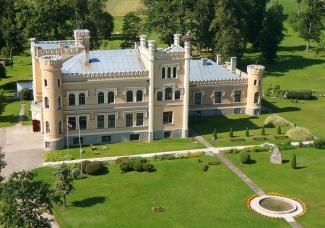
Culturally and historically, Aknīste and its surroundings belong to the Sēlija region. One of the most popular sightseeing attractions in Aknīste is the luxurious Gārsene Castle, which was built between 1856 and 1860 in neo-Gothic style. Interestingly, Gārsene Primary School was housed in the castle until 2015. Later, the complex was developed into an active tourism object in Sēlija. Visit the former Asare Manor territory (now ruins) to journey into the past where you will witness neo-Gothic style manor buildings such as the church, the ruins of a manor house with underground passages, and residences belonging to the gardener and manager.
Tranquil Vidzeme and Livonian heritage
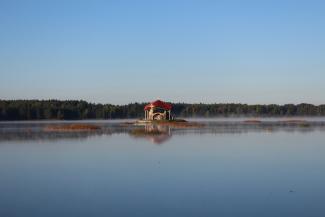
Not far from Riga – on Ikšķile, perched on the island of St. Maynard, surrounded by the waters of the Daugava, are the ruins of the oldest church in Latvia. More than 800 years ago, Christianity got its start in Latvia with the construction of Ikšķile Church on St. Meinard Island. It was built by Bishop Maynard, the first Catholic missionary of the Baltic tribes and church organiser in the Baltic region. At that time, stone construction was unknown in the Baltics, so Maynard invited masters from Gotland to erect the first stone building in the Baltics, featuring a church surrounded by a large fortification.
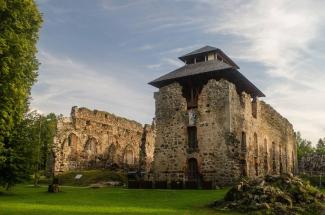
When travelling through Vidzeme and enjoying the gems of Livonian heritage, we recommend visiting the unique Rauna Castle Ruins and Observation Tower near Cēsis. Rauna Castle was one of the residences of the Archbishop of Riga from the 14th to the 16th centuries and one of the main centres of power in medieval Livonia; it may even have had city rights. Once upon a time, Rauna Castle was definitely one of the strongest fortresses in Vidzeme. Today, it is one of the most impressive and best-preserved castle ruins in Latvia. The Rauna Castle observation tower offers a bird’s-eye view of the site that is open to the public. It also houses interactive exhibition stands and information boards, as well as a digital stand with useful information.
Far away from the hustle and bustle of big cities in the very heart of Alūksne, next to a picturesque lake, the Alūksne New Castle and adjacent Manor Park proudly stand. The castle, built in late Tudor neo-Gothic style in the second half of the 19th century by order of Baron Alexander Joseph von Fitinghoff, is one of the most remarkable architectural monuments in Latvia. The castle interiors hide secret artistic wall and ceiling paintings of various architectural styles, some of which have been uncovered.


