


Train travel in Latvia has become increasingly popular in recent years thanks to modernised trains and diverse routes, as well as the fact that train schedules are easy to check online, making it easy to plan multiple trips at different times. Trains also offer a unique way to get to know the country – a unique opportunity to glimpse landscapes, forests, river valleys and cities that often go unnoticed when travelling by car
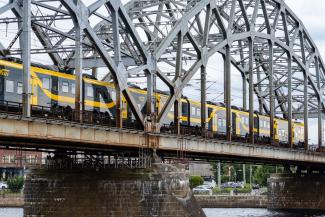
The Latvian railway network connects Riga with several parts of the country – the Kurzeme coast, the cities of Latgale and the northern border region. Railway lines lead to Jelgava, Tukums, Skulte, Krustpils, Daugavpils and other regional hubs. The end points of many routes are also interesting travel destinations, with stations that are usually located in the city centre or close to historical areas. This means that you will exit the train into the urban centre, in the proximity of parks, old town streets, museums, or coastal promenades.
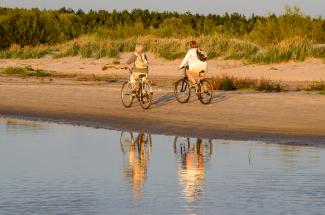
There are many reasons why travelling by train is convenient in Latvia. Firstly, the railway provides traffic-free access to both urban and rural locations, eliminating the need for parking and ensuring greater safety year round. Secondly, trains are adapted for bicycle transportation and tourism. Cycling routes in Latvia offer an excellent way to access nature, and cultural and historical heritage: the Baltic Sea coast, green forests, deep ancient river valleys, historical castles, manors, churches, museums and ancient old towns with unique architecture. Trains are also the preferred method of travel for individuals and couples, facilitating easy access to hotels in the city and nearby guest houses. In addition, Latvia is dotted with breweries and wineries, all of which are there to enjoy for anyone who doesn’t have to get behind the steering wheel. If you arrive in Riga by plane, you can enjoy all the attractions in Art Nouveau Riga before catching a train to both neighbouring Baltic countries – Lithuania and Estonia. Finally, there are so many connections that, as you make your way to the most distant points on the Latvian map, you can definitely take a few hours to visit other sights and historical landmarks along the way. For example, on the way to Valka you can stop in the iconic tourist towns of Sigulda and Cēsis, and while heading to Daugavpils you can stop to see the Ogres Zilie kalni and Daugavas loki nature parks. If your destination is Liepāja, be sure to stop in Jelgava to see the wild horse pastures just outside of city limits and in Dobele to visit ancient Semigallian Castle.
Liepāja – a seashore pearl
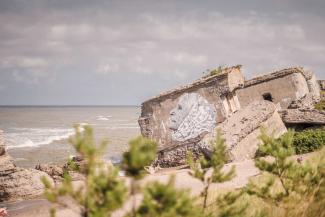
Liepāja is one of the most distant and interesting railway destinations in Latvia. Located on the Baltic Sea coast and the third largest city in Latvia, with a history closely connected to the port and sea trade, Liepāja combines ocean views with culture and historical architecture. The city features a wide sandy beach, cultural events, concert halls and various museums. Among the most popular sights are the Karosta in Liepāja with its unique military heritage, the Northern Forts by the sea, Holy Trinity Cathedral and the Great Amber concert hall. The city is also home to Jurmala Park, Peter Market and various examples of Art Nouveau architecture. Liepāja and its surroundings are also adapted for active travel thanks to a well-developed bicycle infrastructure network that connects beaches, parks and coastal areas. In addition, Liepāja has a wealth of accommodation, from hotels and SPA complexes to small guest houses by the sea. When you are in Liepāja, be sure to try the city’s fish delicacy – “Liepājas menciņa”.
Daugavpils Fortress and Mark Rothko Art Centre
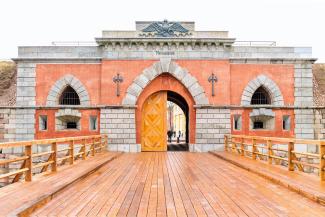
Daugavpils is the largest city in Latgale and one of the most important railway junctions in eastern Latvia. The main attraction of the city is Daugavpils Fortress, one of the best-preserved 19th-century fortress complexes in Europe. The Mark Rothko Art Centre is located on the fortress premises, exhibiting world-famous works from abstract expressionist and contemporary art. Another point of interest in the city is Church Hill, which accommodates churches of different denominations in close proximity, as well as Latgale Zoo and the Daugavpils Shotgun Factory – a historical industrial site where you can learn more about 19th-century production.
Daugavpils is a good starting point to access Latgale nature and cultural routes, for example, the Augšdaugava region and nearby lakes. For more active travellers, cycling along the banks of the Daugava and water tourism are also options.
There are several hotels and guesthouses in the city, from which you can conveniently explore Latgale.
Valka – on the border of Latvia and Estonia
Board a train headed north to visit Valka – a city that straddles the border between Latvia and Estonia, alongside its twin Valga on the opposite side.
Historically, both conglomerations were united under one name, Walk, but after the border was drawn in 1920, the city was cut in half. The two cities share a square and streets that allow pedestrians and vehicles to cross the border without hindrance. Tourists also enjoy the local nature routes and former railway lines, which along certain sections can be travelled on a railway bicycle.
The area is frequently used as a starting point for trips to North Vidzeme or South Estonia.
Gulbene and Alūksne – a journey by historical narrow-gauge train
Another special railway route in Latvia exists between Vidzeme–Gulbene, where you can change trains to board a unique narrow-gauge train and travel to Alūksne. This is one of the most interesting adventures in the Baltics, combining both historical transport and a scenic trip through Vidzeme.
From Riga, take the train to Gulbene, a city that has historically been an important railway junction with a station dating back to the 1920s. A few steps from Gulbene station is the narrow-gauge railway depot, where the famous Gulbene–Alūksne narrow-gauge train departs. This locomotive runs on a 33-kilometre narrow-gauge railway line, the last regular railway of this type in the Baltic States and only surviving remnant of the Stukmaņi–Valka railway line built in 1903. It runs several times every day, carrying both locals and visitors.
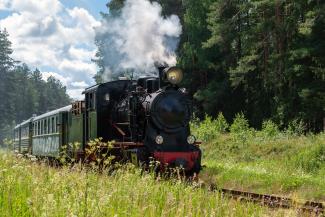
A ride on a Bānītis is more than just transportation from point A to B – it is a journey through time as the train slowly crosses the fields, forests and small villages of Vidzeme, with stops at Stāmeriene, Kalniena or Paparde, among others. In some places, the train stops only on request or if there are passengers waiting at the stop. The historic steam locomotive recreates the atmosphere of 20th-century train travel, when narrow-gauge trains were an important means of transportation in Vidzeme. The trip from Gulbene to Alūksne takes about an hour and a half, plenty of time for you to take in the view of forests, meadows and small historic stations in the Vidzeme hills. The slower pace and scenic route make the Bānītis one of the most romantic train trips in Latvia.
Your destination is Alūksne, one of the most picturesque towns in Vidzeme, situated next to Lake Alūksne and featuring a large manor park with various architectural elements and viewpoints. The most popular sites include the Alūksne New Castle, built in the 19th century and currently operating as a museum, as well as Temple Hill – one of the highest points in the town, providing a stunning view of the lake and castle grounds. A multimedia exhibition at Bānītis station recounts the history of the narrow-gauge railway and its importance for the Vidzeme region. Cycling and hiking routes are also available in the Alūksne area, allowing you to combine a train ride with active leisure.
Go green
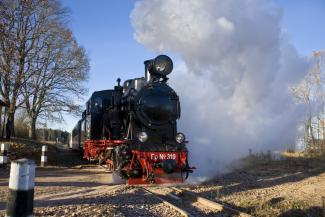
If you intend to explore Vidzeme by train and are travelling with a bike, don’t miss Green Railways, a network of greenways in Vidzeme and South Estonia created along old rail lines, which lead through picturesque landscapes and forests and are suitable for cyclists, hikes, horseback riding and skiing in winter. The paths primarily consist of gravel or forest roads and are well marked. There are a variety of routes available: Melturi–Gulbene, Lāde–Rūjiena, Ainaži–Valmiera, Valga–Ape (Estonian/Latvian border).
You’ll see a variety of natural objects, beautiful rivers and lakes, and cultural and historical settlements along the way. The Green Railway also passes through Gauja National Park and the North Vidzeme Biosphere Reserve, which is home to great biodiversity, natural springs, sandstone outcrops, picturesque views and unique natural, cultural and historical monuments. The best time to visit the Green Railway is from May to October. In winter, you can ski or take a ride on a horse- or husky-drawn sleigh.
As you travel through Latvia, pay a visit to local tourist information points for exhaustive and high-quality information. These centres offer not only detailed maps and route outlines, but also valuable recommendations for accommodation and dining. Have a good trip!


