

In Latvia, religious and folk traditions have developed and coexisted side by side over the centuries. Alongside Christian denominations, ancient Latvian beliefs, seasonal customs and nature-related events occupy an important place in the Latvian cultural space. This diversity is reflected in festivals and rituals, as well as churches, holy places and pilgrimage traditions, which are still an important part of Latvian culture and spiritual life.
Today, more than 1,100 religious congregations are registered in Latvia. Various Christian faiths, including the Lutheran, Catholic, Orthodox and Baptist denominations, occupy an important place in the religious environment of Latvia. Official church statistics show that a large part of the Latvian population identifies with a Christian denomination. At the same time, many attend church irregularly, though this does not prevent them from being active adherents and participants in Christian holidays and ancient folk traditions.
Religious diversity provides foreign visitors with the opportunity to explore a rich tapestry of churches and spiritual traditions. A striking example is the Aglona Basilica, a sacred site with international importance and an important pilgrimage centre. Events such as the “Night of Churches” and “Open Churches Day” can provide broader insight into the spiritual, cultural and architectural values of churches, while the “Latvia – the Land of Organs” initiative highlights the historical heritage of organs found in Latvian churches and the sounds of church spaces.
By getting to know the diverse and fascinating historical and sacred heritage of Latvians, you will have a better understanding of not only Latvia’s Christian landscape, but also the history, values, and identity of its people. As usual, you can be sure that Latvia will surprise you.
Ancient folk traditions and Christian holidays
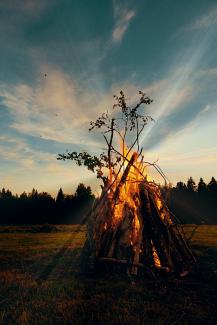
The Latvian calendar is rich in various customs and beliefs, related to both ancient folk traditions and Christian holidays. Christmas is an importance event in the winter season, with its associated rituals of log pulling, funeral pyres, singing, and other rituals to ensure fertility and prosperity. Easter, in turn, is the main event of Latvian traditional culture in the spring, featuring egg painting and rolling, as well as swinging, a familiar childhood activity associated with the arrival of spring, the power of life, and the return of longer days. Summer culminates on the evening of Līgo and Jāņi, when the solstice is celebrated at the end of June with songs, bonfires, wreath-making, herb gathering and night vigils. Many people leave the city at this time to celebrate the holidays in a rural or natural setting. In autumn, Midsummer Day marks the end of the harvest season and is associated with markets, feasting, and traditions of giving thanks for the summer’s bounty. Some of these celebrations are also officially designated national holidays in Latvia

Latvian churches – where history, culture and religion meet
Latvian churches are not only places of prayer, but also significant monuments of architecture, art and history. Dome Square and Cathedral, one of the oldest sacred buildings, as well as the largest medieval church in the Baltics, is also known for its organ concerts. St. Peter’s Church in Old Town Riga is also one of the most remarkable medieval churches in the Baltics, and its tower offers a panoramic view of Riga. The church is also associated with the legend of the seven roosters – the current occupant of the tower is the seventh.
Cēsis St. John’s Church, built in the 13th century and consecrated in 1284, is also one of the oldest churches in Vidzeme. It is closely connected with the history of the Livonian Order, as Cēsis was once one of the most important centres of German power in the Baltics. Every Vidzeme itinerary should include the Turaida Museum Reserve, which provides information on more than a thousand years of cultural history, including Church Hill.
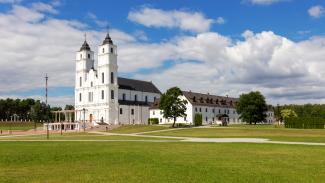
Latgale churches are distinguished by their denominational diversity. Aglona Basilica is one of the most important Catholic holy places in Latvia, where the Assumption of the Blessed Virgin Mary is celebrated in the summer and pilgrims gather. Daugavpils Church Hill is unique because it houses churches of the four main Christian denominations of Latgale in close proximity.
Alsunga is a special place in Kurzeme as an important historical Catholic centre in the Suiti cultural space. In Liepāja, we especially recommend visiting the St. Nicholas Orthodox Sea Cathedral in Karosta with its gilded domes, as well as Holy Trinity Cathedral, where the world’s largest unreconstructed mechanical organ is located.
When visiting Zemgale, we recommend including the Jelgava St. Trinity Church Tower, which is not only a modern museum, but also the oldest surviving building in the city – until 1944 it was part of one of the first Lutheran stone churches in Europe. Meanwhile, the Skaistkalne Roman Catholic Church is an important centre of Catholicism in Latvia and the second most popular pilgrimage site of the Virgin Mary after Aglona.
When churches open their doors
Every year, on a Saturday at the beginning of summer, spiritual cultural events take place throughout Latvia to commemorate the Night of Churches and Open Church Day. These ecumenical events have been taking place in Latvia since 2014 and bring together hundreds of congregants from different Christian denominations throughout the country. On this day, churches open their doors to the public, inviting them to learn more about the heritage of Christian culture, architecture, art and faith.
Many churches start welcoming visitors in the morning, but later events usually continue until midnight. During this time, churches become venues for concerts, exhibitions, talks, lectures and excursions, while maintaining their special atmosphere of silence and spirituality.
Traditionally, on this day, church bells throughout Latvia ring three times – at noon, in the evening and late at night, coinciding with the rhythm of the hour’s prayers. During the evening, a joint Lord’s Prayer is spoken in many places, uniting congregations and visitors of different denominations in a shared spiritual moment.
The idea of a Church Night came to Latvia via Austria, which has inspired similar events in other countries. This project has taken root in Latvia due to the coexistence of various Christian traditions because it fosters a common cultural and faith experience.
Organ music concerts – a special acoustic adventur
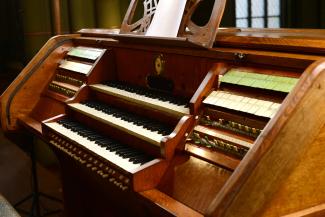
The Historical Organ Festival “Latvia – The Land of Organs” is a special summer event in July and August held since 2017 that invites visitors to tour the churches of Latvia and get to know the rich organ heritage of our country. This festival is an opportunity to experience a unique atmosphere, where music combines with architecture, history and sacred space. Each concert allows you to rediscover not only excellent, culturally and historically significant instruments, but also the special atmosphere of the church itself.
The appeal of this festival is largely due to the acoustics inside churches and cathedrals. The wide vaults, stone and wooden surfaces, high ceilings and sonorous volume of the nave create a long and rich sound vibration, which gives organ music depth, grandeur and timbral diversity. This makes each concert not only a concert, but also a spatial and emotional experience.
Outstanding Latvian musicians often participate in the festive programmes, and the repertoire is carefully created for the specific character of each instrument, church, and cultural and historical environment.
Pilgrimages in Latvia
In Latvia, the pilgrimage tradition combines religious belief, prayer, silence and self-searching. The most important pilgrimage destination in the country is the Aglona Basilica in Latgale – a Catholic shrine of international importance and one of the most important centres of Marian veneration in the Baltics. Pilgrims travel to Aglona on foot from various parts of Latvia, and the journey itself is often perceived as a spiritual practice, during which arriving at the destination is just as important as sharing the road with other pilgrims, physical motion, prayer and reflection.
Another important pilgrimage site is the Skaistkalns Sanctuary in Zemgale, where the ancient tradition of veneration of the Virgin Mary has been preserved and festivals are still held, gathering pilgrims from various parts of Latvia. This is one of the most important Catholic shrines in Latvia, especially associated with the tradition of family protection and intercession.
The Way of St. James in Latvia is part of the extensive European pilgrimage network leading to Santiago de Compostela. The route within Latvia is not just one short section, but a longer journey that starts in Valka, leads to Riga and then continues in two directions to the Lithuanian border, including through Skaistkalns. Pilgrims include both believers and walking enthusiasts who want to challenge themselves.
Grave celebrations in Latvia and the green ball
As incredible as it sounds, graveside celebrations, including the the green ball, create a vivid cultural experience for foreign guests, especially in Latgale and the Alūksne region. These events are among the most unique summer traditions in Latvia and usually take place from June to the end of August, when families and clans come together to clean the graves, commemorate the departed and commune with long-lost relatives. In Latvia, grave culture is closely connected not only with memory, but also with a sense of belonging to place, family and community.
Historically, these celebrations evolved from traditional summer church services, but in the second half of the 19th century they also became wider social events featuring choirs, orchestras, and local volunteers, concluding with a moment of remembrance that was often followed by a green ball. This tradition is still alive, although the cemetery festival now takes place on the same weekend as the city or parish festival, thereby lending the green ball a cheerful atmosphere.