

Latvia is often called a green oasis, as more than half of its territory is covered with forests. Our country can also boast a coastline of several hundred kilometres and charming beaches on the Baltic Sea. Latvia will surprise you with fantastic architecture and peaceful rural landscapes, friendly prices and high service, while hospitable Latvians make the trip a warm, genuine and memorable experience.
Latvia is a place where sea, forests, lakes, castle ruins, modern culture and centuries-old traditions meet. Unlike Western Europe, Latvia is not overpopulated, and offers you the chance to enjoy the splendour of untouched nature – parks and nature reserves, thousands of nature trails and uniquely beautiful places.
The article will contain useful information about Latvia, the affection it enjoys from its closest neighbours, Riga and the regions, fantastic Latvian nature, the world of Latvian architecture, culture and traditions, MICE opportunities, high-quality catering culture and practical information for travel planning.
About Latvia
Latvia is a country on the eastern coast of the Baltic Sea – the midpoint of the three Baltic states. Latvia is easily accessible by plane, ferry, train or bus. This small but diverse country unites four historical regions – Kurzeme, Zemgale, Vidzeme and Latgale – with Riga as its lively and dynamic centre. Latvia is a member of the European Union and the Schengen area with approximately 1.86 million inhabitants and a territory of 64 thousand square kilometres. The capital is Riga and the official language is Latvian, but English and Russian are also widely used in everyday communication. The currency is the euro, and the country is located in the Eastern European time zone – UTC+2 in winter, UTC+3 in summer.
Why its closest neighbours love Latvia
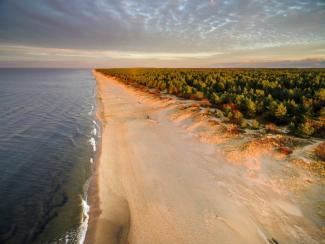
Latvians are happy to share their treasures with their neighbours. In the summer, the Lithuanian language can be heard on the sands of the Kurzeme and Vidzeme seasides – our Lithuanian compatriots feel at home in Latvia. And why not – Lithuania, with its almost 2.9 million inhabitants, has only 40 km of coastline, so it is no wonder that many prefer the spacious 500 km long beaches of Latvia. We always welcome Lithuanians – after all, the Baltic Sea is big enough to have enough space for all those who enjoy the sun and waves.
Our friends in Estonia have a lot of sea, but Latvia is also indispensable for Estonians – we are their closest land route to Western Europe. Our northern neighbours regularly cross Latvia on their way to the rest of the world, and they are also always warmly welcomed here. In addition, Estonians regularly go on shopping trips to Latvia, and Riga is often the main magnet and destination.
Even if Latvia is only as a transit country, we are grateful for every visitor. After all, the friendship between the Baltic States is strength – we share what we have and warmly welcome our neighbours!
Regions of Latvia and Riga
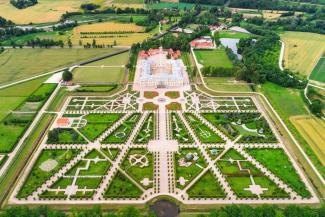
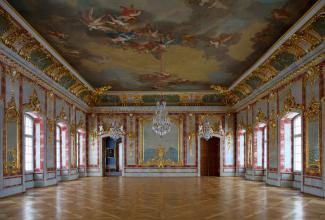
The regions of Latvia, Riga and the Riga region form a diverse mosaic, where each region and city has its own character, charm and story. Kurzeme in the west entices with its picturesque Baltic Sea coast, wide beaches and storm-washed pieces of amber, while historical cities add cultural depth to the journey – Liepāja lives in the rhythm of music and the sea, while Kuldīga enchants with its romantic old town and The Venta Waterfall. Zemgale in the south is known as the “breadbasket” of Latvia, where plains and fertile fields mark a wide, peaceful landscape, while luxurious castles and manors stand as a reminder of its historical scope – Rundāle Palace with its Baroque splendour is a real pride of the region, and Jelgava with its ducal palace and student atmosphere gives Zemgale a lively atmosphere.
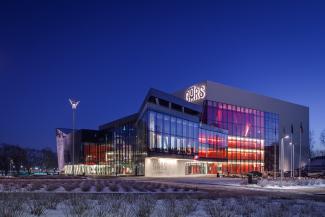
Latgale in the east is a land of blue lakes, where water, forests and hills alternate with a special cultural aura. Here you can hear the Latgalian language, experience warm hospitality and live craft traditions. Daugavpils stands out with its fortress and the Mark Rothko Museum, Rēzekne – with the Embassy of Latgale GORS and a strong historical identity, while the Aglona Basilica is an important spiritual centre and one of the most impressive pilgrimage destinations in the Baltics. Vidzeme in the north offers hills, rivers and forests, as well as one of the pearls of Latvian nature – the Gauja National Park, where Sigulda and Cēsis entice with scenic castle ruins and extensive active recreation opportunities, while Valmiera combines historical charm with a modern rhythm of life.
Riga is the dynamic centre of Latvia, where history, culture and modern city energy intersect. Riga, as the largest city in the Baltics, enchants with its UNESCO-protected Old Town Riga, excellent Art Nouveau architecture and a rich offer of museums, concerts and restaurants. Pieriga offers easily accessible locations to relax by the sea, but the Latvian Ethnographic Open-Air Museum allows you to experience the ancient farmsteads and traditions of all regions in one place.
The fantastic, diverse nature of Latvia
Latvia is a country with impressive landscapes and a unique natural heritage, which takes environmental protection and biodiversity seriously. We have 658 specially protected nature areas, which occupy about 13% of the country’s land area, and forests cover about half of Latvia’s territory, providing a home for diverse flora and fauna.
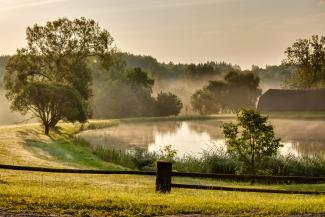
The range of protected areas is amazingly wide – from national parks and biosphere reserves to nature parks, reserves, protected landscape areas, natural monuments, marine areas, outstanding trees and large boulders. Latvians are proud to share their natural treasures, which is why every area is arranged and adapted for guests from all over the world.
An important role in nature conservation is played by the national parks – Gauja, Ķemeri, Rāzna and Slīteres – which are also part of the Natura 2000 network. Gauja National Park, the largest and oldest in Latvia, is a particularly important centre of biodiversity, while Ķemeri National Park stands out with its wetlands, bogs, and medicinal mud, providing a habitat for rare and protected species.
Discover Latvia’s architectural heritage
Latvia’s architectural heritage is surprisingly expansive – from traditional country houses and sophisticated wooden buildings to palaces, manors, churches and magnificent Art Nouveau sites. You will find these treasures not only in Riga, but also in small towns, villages and off the beaten path.
Riga is especially proud of its 800 Art Nouveau houses and around 4,000 unique wooden architectural buildings, but the city’s historical roots are symbolically represented by the Dome Cathedral, founded in 1211. In Latvia, history is a constant companion that exists alongside modern architecture to create a unique atmosphere that can be enjoyed without having to travel far: medieval castles and ducal estates are just a stone’s throw away. Latvia’s Art Nouveau heritage captivates not only thanks to facades – painted ceilings, luxurious staircases and fine details also shine inside. This historical atmosphere is particularly tangible in Riga on Alberta, Elizabetes and Strēlnieku streets.
Culture and traditions
Currently, the most recognisable and world-famous carrier of Latvian culture is the animated film “Stream”, made in Latvia in 2024, which won the Academy Award for Best Animated Film in the Academy Awards category.
Latvian culture features both tangible and intangible cultural expressions created by the Latvian people on the territory of Latvia. Latvians have preserved a rich heritage of folk music and dance. Our Song and Dance Festival, which takes place once every 5 years and brings together thousands of participants from all over Latvia, is fantastically popular and stunning. The Song Festival is included in the UNESCO Intangible Cultural Heritage of Humanity list. Traditional folk costumes differ across regions of Latvia and are often used during festivals and cultural events.
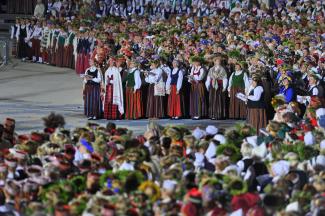
Foreigners who have participated in these festivals as spectators admit that such breath-taking national unity and identity is rarely found anywhere else. One of the most important holidays in Latvian culture is the summer solstice, which is celebrated with songs, dances, bonfires and various rituals. Green balls and merrymaking are held throughout Latvia. Christian holidays such as Christmas and Easter are also deeply integrated into Latvian culture, often mixing with ancient traditions. These holidays can be combined with visiting churches and services.
To experience these and other holidays, plan your trip at a time when these holidays are taking place and Latvia breathes in the same rhythm with them.
Modern conference centres, hotels and free support for MICE clients
Hotel and conference infrastructure is an area where Latvia stands out. In recent years, modern conference facilities and hotels have developed in Riga and other Latvian cities, which can accommodate both small seminars and larger congresses. The quality bar is high, but the prices are competitive compared to other European cities.
Anyone planning to organise business tourism events in Latvia or considering Latvia as a destination for their plans is provided with valuable, free consultations. Regardless of whether you are only just beginning to plan or have already made some choices, we can help you with recommendations for conference venues and contacts for event agencies, as well as listen to your plans and ideas. A special offer has been prepared for organising MICE events in Latvian castles and manors.
Latvia – high-quality food and unique flavours
Latvia offers not only a variety of landscapes and contrasts, but also a rich world of flavours, where ancient traditions meet modern nuances. Latvian traditional dishes are simple and hearty, made from local products, such as potatoes, cabbage, rye bread and fish, which reflect both the abundance of local nature and the way our ancestors lived. The journey through Latvian flavours takes us to home-made markets, family restaurants and summer “Home Cafe Days”, where traditional recipes live on in heartfelt stories, and every bite is a small slice of Latvia. MICHELIN-acclaimed restaurants also attract connoisseurs of excellent cuisine, even from very distant lands.
Latvia is loved and enjoyed by tourists, regardless of whether they visit Christmas markets with the family, or organise a wedding or a MICE event in one of Riga’s business centres. We look forward to seeing you!


