


Latvia’s cultural and historical heritage is like a living book that tells not only of our own people, but also of the course of wider European history. From the medieval Hanseatic trade crossroads to the twists and turns of 20th-century history, from the silhouettes of the towers of Old Riga and the cobbled streets of Kuldīga to the Strūve geodesic circle – each place holds a tale, woven through with the common heritage of Europe.
Latvia’s cultural values are not just local in scope. They are part of the wider cultural map of Europe. UNESCO World Heritage Sites and the European Cultural Heritage Label mark our connection with the international cultural space, showing that the story of Latvia is an integral part of European and world culture.
UNESCO World Heritage Sites in Latvia
Latvia has three UNESCO World Heritage Sites. Each of them reveals a different facet of the Latvian and European cultural story.
The historic centre of Riga, or Old Town Riga, is like the heartbeat of the city, where medieval cobblestones, Gothic church towers and Art Nouveau façades meet. The city has a special architectural layering – medieval buildings, 19th-century boulevards and unique wooden buildings, which together create an unforgettable story.
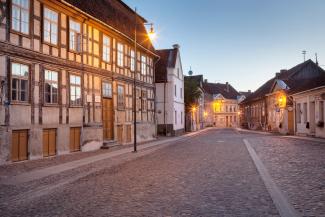
Another UNESCO heritage treasure is the Old Town of Kuldīga. It is picturesque with cobblestone streets, red-tiled roofs and intact wooden and stone buildings from the 17th-18th centuries. The ancient Venta Valley gives the city a special scenic breadth, while the Venta Rumba – the widest waterfall in Europe – gives Kuldīga a romantic and at the same time majestic character.
Meanwhile, the Struve Geodetic Arc, marked in Latvia by two triangulation points, is on the UNESCO heritage list as a testament to human perseverance and scientific achievements. This 19th-century project stretches across ten countries and once helped to accurately measure the size and shape of the Earth. Each point of this arc is like a sign that connects us to a wider path of world knowledge.
European Heritage Label
The European Heritage Label is awarded to places that convey a broader message of European history, identity and values. In Latvia, two places have been awarded this special status – the Three Brothers of Riga and the historical centre of Turaida.
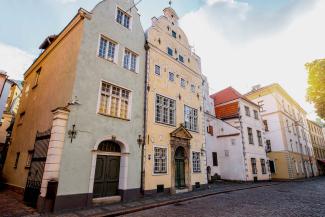
The Three Brothers in Riga – three adjacent residential buildings on Mazā Pils Street – are a reminder of the city’s changing spirit over the centuries. The oldest of them was built in the 15th century, while the others were built in the 16th and 17th centuries. Together, they form a unique architectural ensemble, reflecting a mix of different eras and styles – from Gothic to Baroque influences. Today, it is home to the National Cultural Heritage Board, so this place not only tells the story of the past, but also represents the present-day concern for preserving heritage for the future. By receiving the European Heritage Label, the Three Brothers became a symbol of Latvia and Europe’s joint efforts to preserve cultural roots and at the same time look forward.
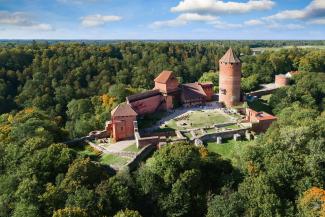
The historical centre of Turaida is like a living time capsule in the landscape of Vidzeme, where the towers of Turaida Castle remind us of the twists and turns of Livonian history. In addition, the Turaida Museum Reserve actively maintains a living intangible heritage – folklore traditions, craftsman skills and public involvement in cultural events.
Stories of European historical influence in Latvia
Latvia’s cultural and historical landscape is like a tapestry, woven with various threads of European history – from the times of the medieval orders and the steps of the Hanseatic merchants to modernist architecture and the splendour of folk traditions. In addition to the officially recognised UNESCO and European heritage label objects, there are many places that vividly reveal our close connection with European history.
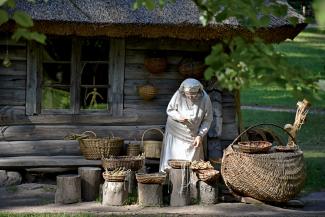
Cēsis Medieval Castle is one of the most striking witnesses to this story. Built in the 13th century during the rule of the Livonian Order, it later became an important centre of the Teutonic Order. Today, Cēsis comes to life with a medieval garden, artisan workshops and interactive tours, allowing visitors to experience the atmosphere of the European Middle Ages right here in Latvia. The Latvian Ethnographic Open-Air Museum, in turn, is like a living history guide under the open sky. Here are wooden buildings from all regions of Latvia, reflecting traditional construction, household and craft skills. More than 118 buildings and 150,000 objects create a unique picture of rural life over the centuries. This museum is not just a repository of exhibits – it is a living cultural centre with crafts fairs, folk festivals and folklore events that connect us with the rich intangible heritage of the peoples of Europe.
As a symbol of modern European architecture and city life, Riga Central Market should also be mentioned. Opened in 1930, it was one of the largest and most modern markets in Europe at the time. Five huge pavilion buildings, built using converted zeppelin hangars, combine neoclassical style with art deco elements. Today, the market is not only a gastronomic centre, but also a place where the rhythm of everyday life meets the grandeur of historical heritage.
Thematic routes
Latvia offers not only individual heritage sites, but also entire routes that allow you to travel in time and space, enjoying the stories of different eras. Each of these routes describes local traditions in the context of wider European history.
Hanseatic route
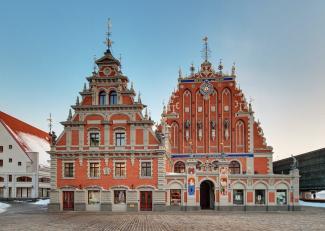
Riga, founded in 1201, soon became one of the most important cities of the Hanseatic League in the Baltic Sea region. Merchant ships from all over Europe arrived here, foreign languages filled the streets, and the city flourished as a centre of international trade. In the narrow streets of Riga, this bustling time is still felt. Of particular note is the Town Hall Square, where the House of the Black Heads is located, which reminds of the brotherhood of young merchants and the spirit of the city.
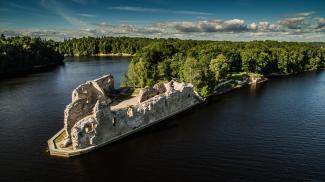
However, the Hanseatic story in Latvia is not limited to the capital. Kuldiga, with its 13th-century old town, was an important trading point, where local merchants exchanged fish, grain and textiles with their Hanseatic partners. But Valmiera tells the story of the city’s importance and the development of trade in Vidzeme at that time. Limbaži, an ancient trading centre, offers church towers and streets that have survived to this day, where you can still feel the atmosphere of trade from the 13th to the 16th centuries. Meanwhile, Koknese, an ancient castle of the Order and a fortification on the banks of the Daugava River, was strategically important for both trade and military defence, connecting the cities and the Hanseatic routes.
Walking along the Hanseatic Route, you can imagine the times when Latvian cities pulsed as the artery of European trade. With each paved street, each tower and ancient warehouse, a story of wealth, cultural exchange and cooperation is brought to life – about the history of Europe that pulses here in Latvia.
European Military Heritage Routes
Latvia’s landscape is rich in military heritage, reflecting Europe’s complex history. From medieval castles of the Order to Cold War bunkers, these places allow us to experience both dramatic historical developments and humanity’s ability to survive and renew itself. The medieval heritage – Cēsis Castle, Bauska Castle and Dobele Castle – reminds us of the greatness of the Livonian and Teutonic Orders. As already mentioned, the ruins of Koknese Castle were once an important fortification for protecting trade and military routes. So are the Sigulda and Krustpils Castles, which have served as strategic fortifications for centuries.
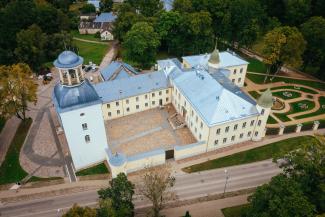
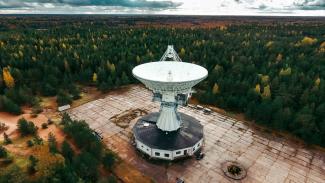
Daugavpils Fortress is one of the most impressive 19th-century military sites in Northern Europe and demonstrates the strategic ambitions of the Russian Empire. The heritage of this era also includes the Liepāja Karosta and the Northern Fort there, which allow us to assess the scope with which the empires built their military might at the beginning of the 20th century. The Ložmetējkalns (Machine Gun Hill) – a symbol of the battles of the First World War, which preserves the memory of the heroism of Latvian riflemen – holds a special place in historical records. The Mangaļsala fortification complex on the outskirts of Riga, which protected the mouth of the Daugava River, and the Irbene radio Astronomy Centre – a once secret Soviet military base that today serves science, are also included in such historical chronicles.
The Cold War period has also left several unique testimonies in Latvia. The Līgatne Soviet bunker, which was planned deep underground as a government shelter in the event of a nuclear war, reveals a special world in which terrible secrecy and readiness for the unknown reigned. The Corner House or the headquarters of the Cheka are equally impressive. This building is a testament to the repressive structures of the Soviet regime and their activities in Latvia. Today, the Corner House is open to visitors, offering the opportunity to get acquainted with its history and role in the Soviet period of Latvia.
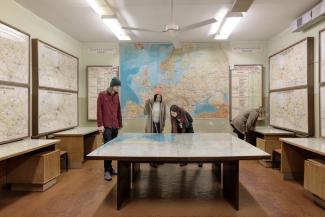
Military heritage sites remind us that Latvia has always been at the crossroads of great events – sometimes as an insurmountable obstacle, sometimes as a bridge between worlds. Travelling through these places, it is possible not only to feel the madness of war, but also to see such regularities even now.
Baroque style castle estate heritage trail
Manors and palaces in Latvia are like a reflection of aristocratic Europe, which came to Latvia with the changes of power of the times. A journey through them is like a walk through the centuries – from the splendour of the Baroque to romantic wooden manors surrounded by nature. Undoubtedly the brightest gem is Rundāle Palace – a pearl of Baroque and Rococo, designed by the Italian architect Francesco Bartolomeo Rastrelli. Rundāle with its spacious French gardens and luxurious halls makes you feel like you are part of the life of a European court. Meanwhile, Ungurmuiža with its unique wooden architecture is a special example of how European Baroque ideas have acquired a local, Latvian form. Preiļi Castle reminds us of the life of the 19th century aristocracy in Latgale, while Jaunmoku Castle, Alūksne Manor Complex and Kazdanga Castle, each with its own character, tell the story of the diversity of European cultural influences in Latvia. The journey is also complemented by other special stories: Mežotne Castle, a classicist pearl on the Lielupe River, the romantic medieval Ēdole Castle, and Dundaga Castle, which allow visitors to feel the atmosphere of the ancient era of knights and aristocracy.
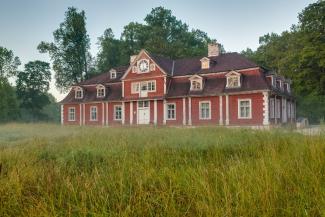
In the heart of Vidzeme, Vecpiebalga Manor preserves a connection with the history of Latvian literature and public opinion, while in Latgale, Biržu Manor reveals the elegance and lifestyle of the Polish and Latgalian aristocracy. Cesvaine Castle, an impressive 19th-century neo-Renaissance castle with towers and a rich interior, is often compared to German and French castles, while Lielplatone Manor shows how classicist parks and farm buildings shaped the rhythm of life in the centres of nobility. Stāmeriena Castle is an eclectic and neo-Gothic masterpiece with a certain Italian romance, while Jaunpils Castle is one of the few castles that has preserved the atmosphere of a medieval fortification with a bridge and ancient walls, telling the story of the age of knights and the might of ancient Europe.
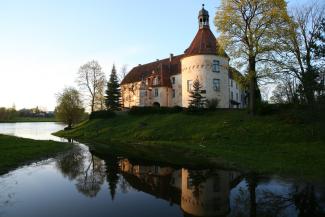
A journey through these castles and manors is like a kaleidoscope of historical twists and turns, in which every stone, tower and garden brings to life the pages of the past and tells the story of what has been experienced over the centuries.
By travelling to cultural and historical sites, we not only discover the identity of Latvia, but also join the broader European cultural path. It is a story that unites the past with the present and inspires the future – a story in which Latvia is an integral piece of the European cultural puzzle


